SIRFN Contributions at PowerTech2025

His participation showcased the breadth and depth of SIRFN’s ongoing joint research activities, presenting cutting-edge work in the simulation, validation and control of future-ready power systems.

Poster presentation

At the conference, Dr Obusevs presented two posters. The first of them showed the progress of VEHICLE (Validation of bEnchmark system for cHargIng ControL in-vEstigation), which was developed in collaboration with SIRFN partners from the Technical University of Denmark (DTU) (Denmark), RSE (Italy), the University of Strathclyde (UK), and Natural Resources Canada (Canada). Led by ZHAW and supported by DTU’s SYSLAB infrastructure, the researchers created, validated and combined a set of components that make it possible to work with topologies.
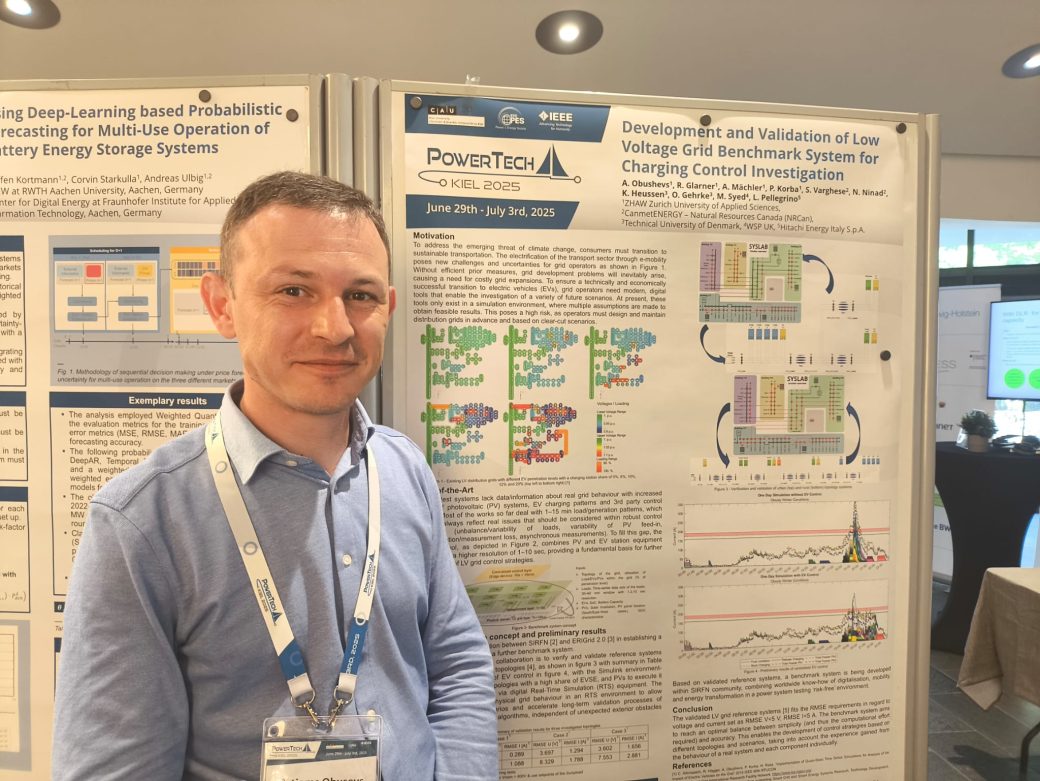
These topologies provide a robust testing environment in which researchers and system operators can design and evaluate control strategies for smart infrastructures based on real-world component behaviour.

This work illustrates the value of coordinated access to international laboratory infrastructure — a core strength of the SIRFN platform.

The second poster was created in collaboration with Scandinavian partners from SINTEF Energy Research and explores geographically distributed coupling between two bulk power systems. By combining the initial dynamic model of continental Europe (IDMCE) with the Nordic power system model (NPSM) and a corresponding high-voltage direct-current (HVDC) interconnection, three real-time implementation schemes were developed using OPAL-RT simulators.
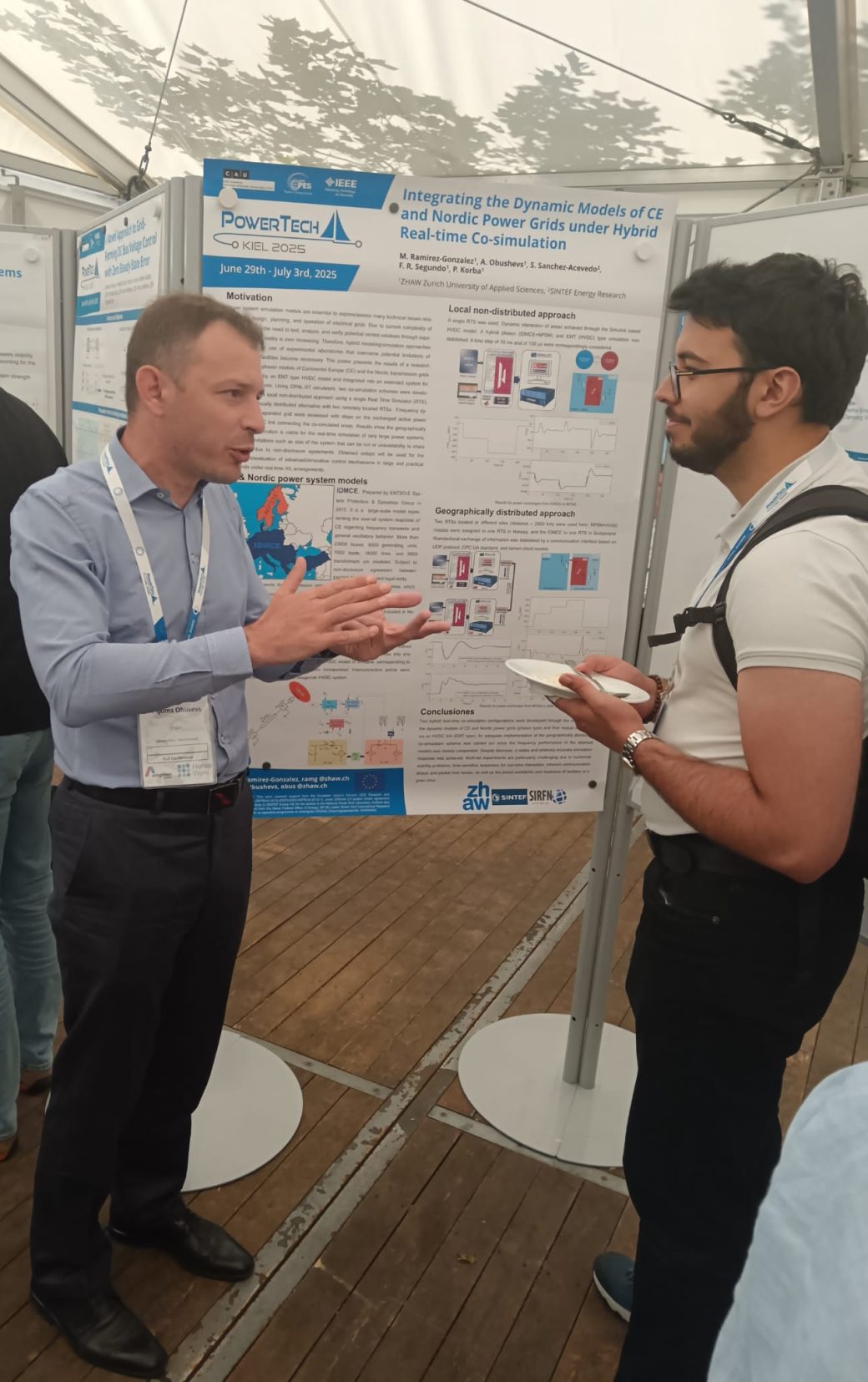
This distributed method addresses a critical issue in multinational research by enabling the study of large, complex power systems without the need to share confidential models or data across borders. The geographically distributed scheme offers a viable alternative for very large power systems, overcoming limitations such as system size and restrictions on model sharing due to non-disclosure agreements.

Panel session
As part of Panel Session 6, ‘Key Stability Aspects in the Operation of Future Power Systems: A European Perspective’, Dr Obusevs presented SIRFN’s work on the Open System Validation Platform (OpenSVP). He emphasised the importance of testing converter-interfaced generation to ensure compliance with regional network codes. The Working Group found that this is not always the case, which could pose a potentially significant hidden threat to our power systems.
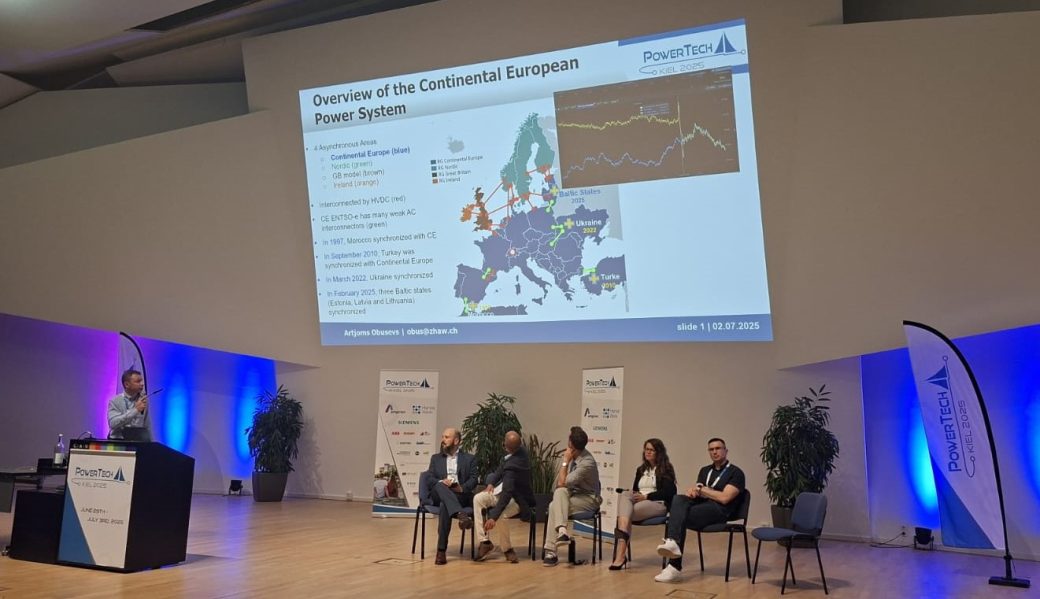
Artjoms Obusevs’ contributions at PowerTech2025 reflect ISGAN SIRFN’s commitment to facilitating high-quality, collaborative research that informs the design and operation of future power systems. Such activities not only build technical capacity and deliver practical solutions for the global energy transition.
Cookie Policy

1. What are cookies?

Cookies are text files that are stored on a visitor's device that store and retrieve information about their browsing activity. Section 3 of this policy details the specific use of cookies on this website.

If you would like more information about cookies, please see the following links:

2. How to accept, deny or revoke consent for the installation of cookies

The website has a consent manager that allows users to accept, reject or configure the installation of cookies when they access the site. The possible situations are as follows:

  • Consent: By clicking the “Accept” button, you agree to all cookies being installed on your device.
  • Deny consent: In the configuration panel, you can reject all cookies by clicking the “Reject” button.
  • Configure consent: Click the “Settings” button to open a menu where you can specify which types of cookie you consent to being installed.

You can also delete cookies using your browser's settings. These allow you to adjust privacy levels, such as denying all cookies or deleting saved ones. To modify these parameters, consult the manufacturer or review the following documentation: Android Chrome, BraveGoogle Chrome, iOS Safari, Microsoft EdgeMozilla Firefox, Opera, and Safari.

Please note that if you restrict or block some or all cookies from this website, some of the functionalities or services provided on the page may not be available.

3. Types of cookies used on this website

  • Technical cookies: These allow users to navigate the website and use its various options and services, including those used by the editor to manage the website, such as controlling traffic and data communication, identifying sessions, accessing restricted access areas, controlling fraud relating to service security, processing registration or event participation requests, counting visits for software licence billing purposes, using security elements during navigation, storing content for video or audio dissemination, enabling dynamic content (e.g., loading animation of text or images) or sharing content through social networks.
  • Analysis cookies: These allow the responsible party to track and analyse user behaviour. This information is used to measure website activity and introduce improvements based on usage data analysis.

4. List of cookies on this website

The cookies used on this website belong to third parties that are different from the party responsible for service provision. Some of the cookie providers may transfer data to third countries. You can find out about transfers to third countries made by the third parties identified in this Cookie Policy in their respective policies. To find out more, click on the provider's name.

  • Cactus uses the PHPSESSID cookie, a session identifier provided by the server that is strictly necessary for the website to function properly, as it enables users to view and interact with its pages. It also uses the cookie_notice_accepted cookie to store the users' acceptance of the website's cookie policy.
  • Google Analytics uses the _ga cookie to collect anonymous information about how users browse the website is collected, in order to obtain statistics on visits received.