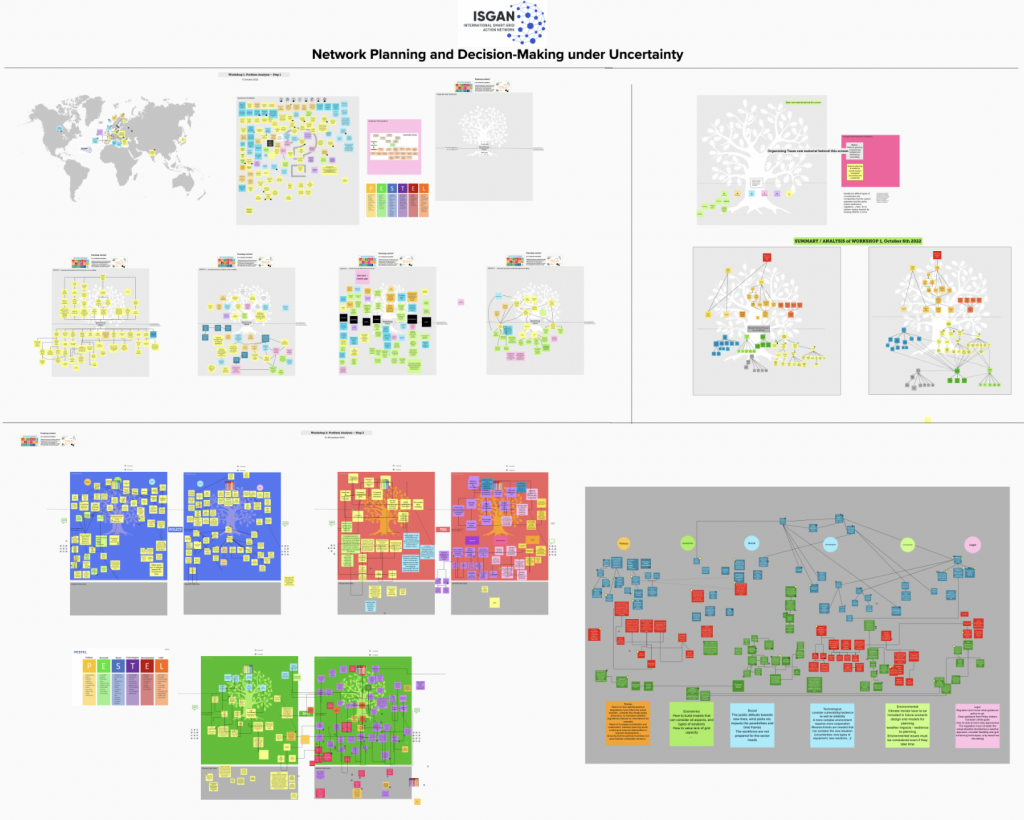
New ISGAN Policy Brief addressing complexity and uncertainty in grid planning processes to accelerate the energy transition
Possible Design Elements of Consumer Support Schemes
The very high prices that have been observed in electricity markets since September 2021 and exacerbated by the Russian invasion of Ukraine have sparked the adoption of different types of support schemes across Europe. This brief fact sheet describes possible design elements to consider for support schemes aimed at final electricity customers. The fact sheet is purely descriptive and not prescriptive.
Webinar: Enhancing cross-border power connections: the FARCROSS and TRINITY experience
15 June 2023 13:00 CEST – ISGAN Virtual Learning invites you to this webinar on the FARCROSS & TRINITY projects experience.
Methods for Customer Dialogue
Customers stand as an important part of the energy transition. For several actors that interact with the energy market, it is important to understand the customers’ perspectives and driving forces. National Regulatory Authorities (NRAs) as well as market actors benefit from increased customer knowledge. In this fact sheet, the Swedish Energy Markets Inspectorate (Ei) summarizes several methods for customer dialogue which can be used by NRAs and other actors to compile and make use of customer perspectives.
Webinar: ISGAN Award 2022 – Excellence of EV Integration in Smart Grid
20 April 2023 – 10:00 CEST – ISGAN Virtual Learning invites to this webinar presenting the winners of the 8th ISGAN Award competition
25th Meeting of the ISGAN Executive Committee
The 25th meeting of the ISGAN Executive Committee took place in Berlin, Germany from 20th-22nd March 2023.
Characterization of the Electric Energy System in view of Flexibility Usage – Technical Report
In the framework of the IEA TCP International Smart Grids Action Network (ISGAN), Working Group 9 aims at identifying challenges and opportunities of flexibility markets related to operational planning. Therefore, this report presents a comprehensive review of the current electricity systems of Austria, Canada, India, and Korea.
Flexibility harvesting and its impact on stakeholders interaction – final report
Globally, the energy sector is continuously striving towards the most reliable, cost- effective environmentally friendly production, transmission and distribution of energy. Recent regulatory frameworks have prompted the urgent strive to become carbon neutral and with an increase in the transition to sustainable energy resources.
Flexibility harvesting and its impact on stakeholder interaction – Explained
Within the global context, the electrical energy system is transitioning in the way that electricity is generated, transmitted and distributed. Due to these changes, system operators are faced with various challenges (technical, ICT, regulatory and economic) to accommodate new technologies due to the drive toward modern power systems. However, these changes have also allowed for the increased opportunity for system development and the inclusion of new market players. Flexibility will provide network operators (together with other stakeholders such as prosumers, aggregators, etc.) with the possibility to increase the stability of the electrical system and ensure a safe, secure and reliable supply. Stakeholder interaction is key to facilitate and enable the integration and utilization of flexibility in future power systems.
ISGAN leads international initiative to future-proof electrical grid planning processes