ISGAN Public Workshop in Genk

Presentations and Summary of ISGAN public workshop on “Building the flexible power systems” held in Genk, Belgium
Asymmetric benefits of smart grids
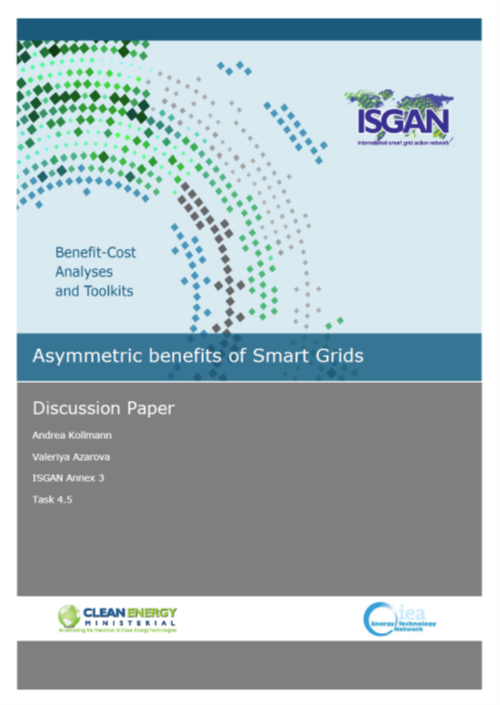
The Discussion Paper focuses on an analysis of the distribution of costs and benefits primarily in relation to decentralized electricity consumption on the residential level. The aim is to discuss whether social imbalances are induced by shifting the burdens of financing the grid towards lower income classes. Such imbalances may be aggravated by the tendency to go off grid, thereby challenging current cost recovery schemes.
Collaboration to face the challenges of the future energy system
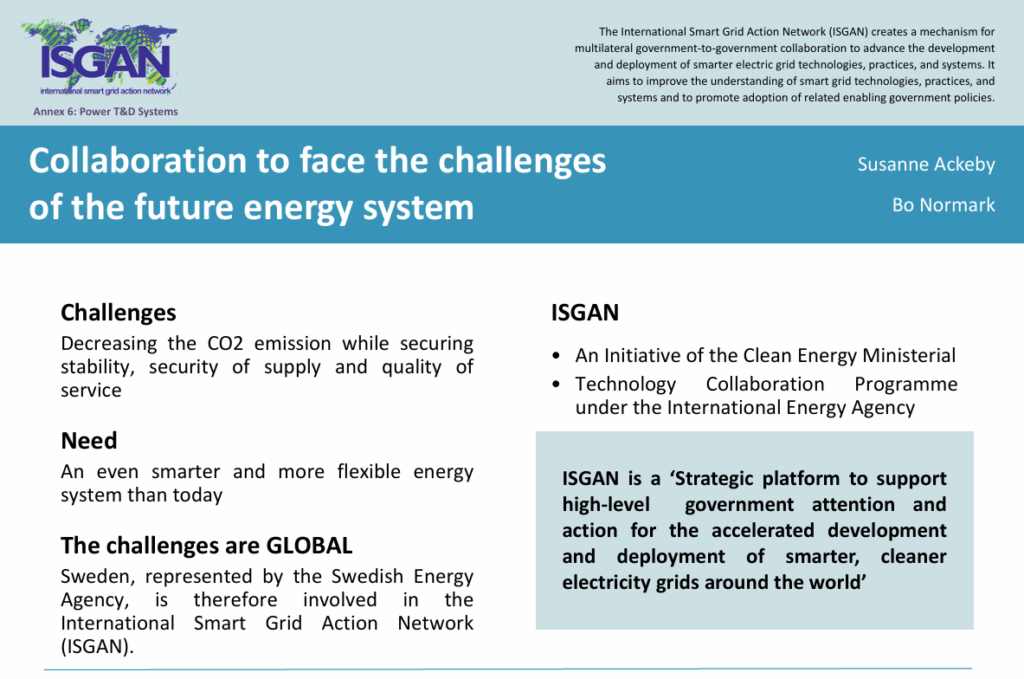
Poster on the challenges of decreasing the CO2 emission while securing stability, security of supply and quality of service.
Why We Do Not Know Much about the Social Dimension of Smart Grids Transition?
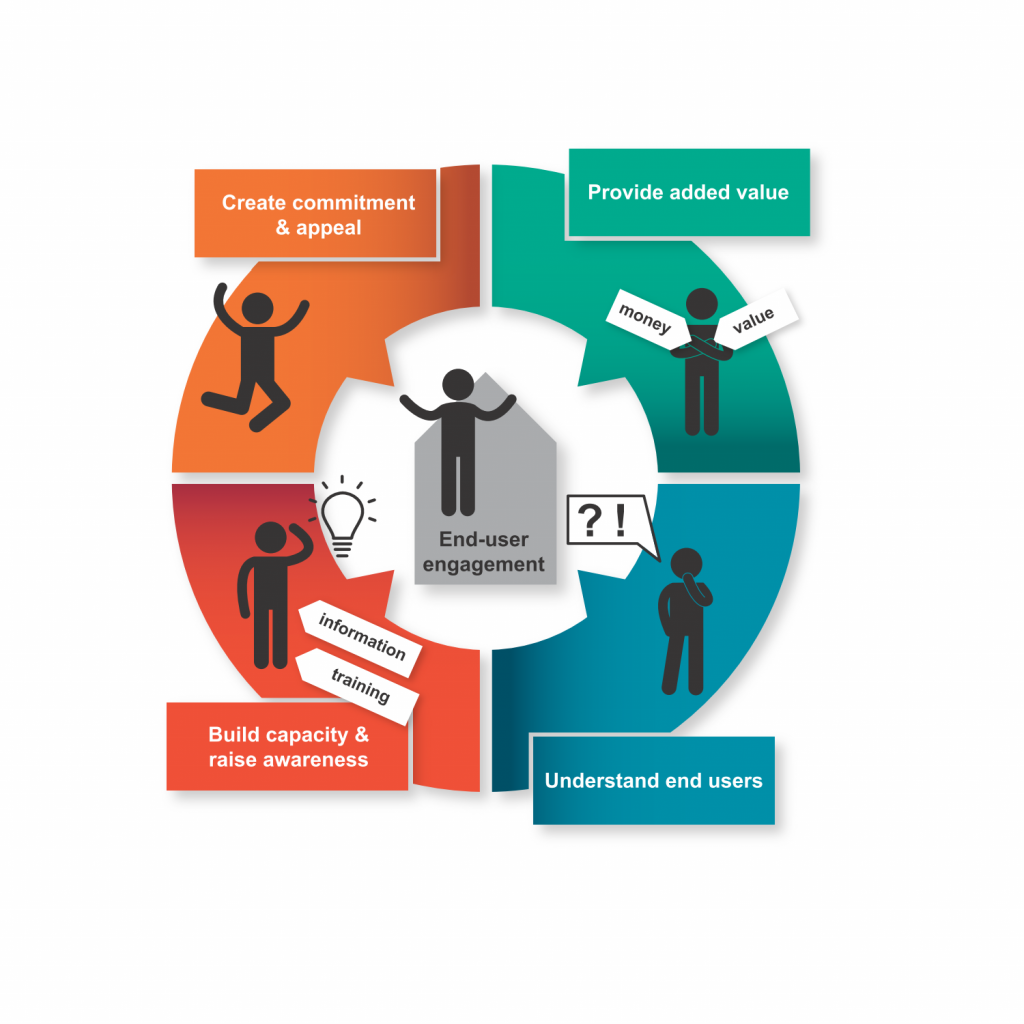
Dealing with smart grids transitions, three years of activity of Annex 7 make it evident that policy makers are having many important questions about the dynamics of institutional change which need new answers.
Single Marketplace for Flexibility

To use this flexibility in a coordinated way, an ever closer cooperation between System Operators will be required. Several approaches for the coordinated use of flexibility for system balancing and congestion management are imaginable.
Smart Grid Policy Messages for the Clean Energy Ministerial

The document was disseminated at the 8th Clean Energy Ministerial that took place in Beijing, China. It was developed by ISGAN Annex 4: Synthesis Insights for Decision Makers.
The Smart and Strong Grid: Technology, Policy, and Finance to Connect People with Reliable Clean Energy

In the developing world, demand is growing rapidly, driving the need for massive investments in grids to connect more and more people while delivering high levels of service.
Spotlight on Smart and Strong Power T&D Infrastructure

This case book, prepared by ISGAN Annex 6 (Power T&D System), is a result of a comprehensive process of surveying, analysing and discussing important achievements in the application of smart grid approaches.
Executive Summary of ISGAN Knowledge Exchange on Distributed Generation, Microgrids, and Smart Metering in Bengaluru

Multicriterial decision making: the smart metering case
Since smart grids impacts require new assessment approaches, this report aims at contributing on the debate about the evaluation of costs and benefits of smart grid projects. In particular, the evaluation approach which combines the Multi-Criteria Analysis (MCA) and the Cost-Benefit Analysis (CBA) is employed for evaluating a smart metering infrastructure case study.