19th ISGAN Executive Committee Meeting (ExCo19)

A highly successful meeting of the ISGAN Executive Committee took place from 19-20 May 2020, premiering as an online meeting due to the circumstances caused by the COVID-19 pandemic.
Micro vs mega trends
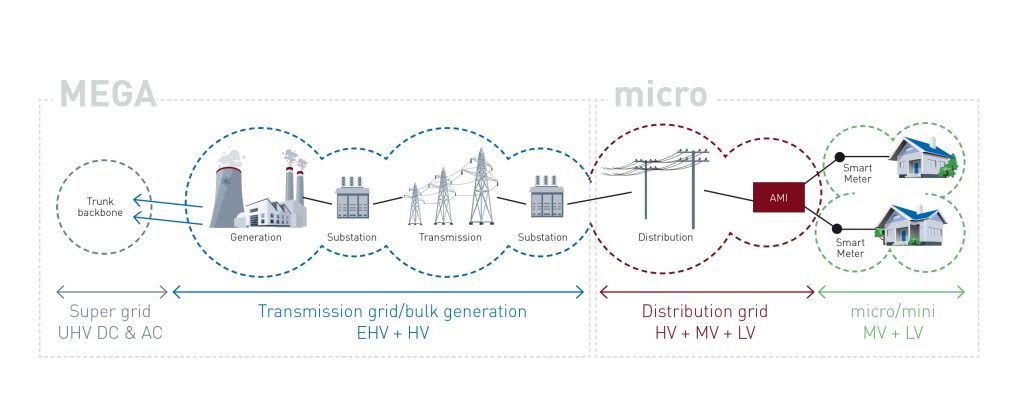
micro vs MEGA: trends influencing the development of the power system
Webinar: InteGrid Scalability and Replicability Results and Replication Roadmap
The results of the SRA from the InteGrid project are now available and in order to assist with the dissemination process, a stakeholder meeting will be conducted through a webinar on the 2nd of June, 2020. This meeting aims to share the outcomes of the SRA among international participants such that the results, lessons learned and replication roadmap from the project can be shared among a wide range of stakeholders.
Webinar: Smart4RES – Data science for renewable energy prediction

The prediction of Renewable Energy Source (RES) production is a worldwide challenge for Smart Grids. In this webinar, you will learn next-generation solutions proposed by the European Project Smart4RES:
• Future power system applications based on RES forecasting,
• Innovative weather and RES forecasting products to increase performance by 10-20%.
Ground-breaking new collaboration involving four CEM work streams

The Clean Energy Ministerial Horizontal Accelerator for Power System Integration of Electric Vehicle (EV) Infrastructure is an innovative new mechanism strengthening the collaboration and capitalising on the synergies between four CEM workstreams involving the International Smart Grid Action Network (ISGAN), 21st Century Power Partnership (21CPP), the Electric Vehicle Initiative (EVI) & the Power System Flexibility (PSF) Campaign. The CEM Horizontal Accelerator is a step towards developing a cross-sectoral and holistic approach to power system integration.
Webinar: New business models for distribution grid stakeholders under high penetration of DER
In a context with high penetration of distributed energy resources, the smartening and digitalization of distribution grids enable unlocking the potential of distributed flexibilities. However, new business models are necessary to make this a reality. This webinar will explore some of these new business models, with a focus on four main agents, namely DSOs, aggregators, end-users, and data service providers. The challenges and opportunities for these stakeholders are discussed, with an emphasis on perspective of the DSO as neutral market facilitator and distribution system optimizer.
The work presented in this webinar is part of the European H2020 project Integrid (https://integrid-h2020.eu/).
Webinar: Assessment of smart grid initiatives: the ISGAN smartgrideval toolkit
Smart grid initiatives have grown the complexity of planning activities, the related wide-range impacts require broad approaches for being properly accounted. The webinar analyses current practices and use cases of the assessment approaches. The advantages of combining Cost-Benefit and Multi-Criteria analyses are presented. A tutorial on the smartgrideval software developed as a part of ISGAN activities is provided.
ISGAN Executive Committee Meeting (ExCo19)

In reference to the latest developments of the Coronavirus risk assessment and outbreaks across the world ISGAN Presidium would like to inform on the situation regarding the ExCo19 meeting in Berlin.
India Smart Utility Week (ISUW) 2020

International Conference and Exhibition on Smart Grids and Smart Cities
Webinar: The need to model coupled energy networks to transition to a decarbonized future
The coordination between planners and operators of coupled energy systems will allow the further integration of renewable energy sources in the electricity network by storing energy in fuel form over long periods of time using power-to-gas, the recovery and more efficient use of heat, and the decarbonization of industrial processes and transportation modes that can’t be electrified.
Energy networks, such as electricity grids and natural gas pipeline networks, have traditionally been planned and operated independently. In order to enhance the integration and coordination of different energy networks, they must be planned and operated in coupled ways. Different energy networks have historically been and are still modelled by different tools.