Reproducibility is a key requirement in validation and interoperability. Yet, power systems experiments are complex and difficult to reproduce and analyse. Meaningful data structures and metadata annotations enable interoperability and offer a foundation for the automation of testing processes.
Objectives
Description
Great value could be harnessed in power systems if stakeholders along the value chain could trust in other’s data. To enable sharing of data in relation to testing, we have to overcome the challenge that energy system data is typically scattered across storage locations and stakeholders, unstructured (or only partly structured), and episodical (missing a larger context). Whereas common data spaces could enable the mechanics of sharing, the trust and mutual understanding of structure and context of test data is still missing.
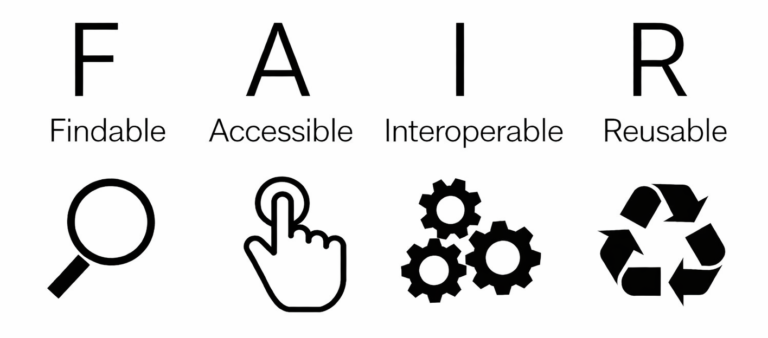
This JRA develops meaningful metadata structures to improve the reporting, interoperability, and reusability of test data. It builds on the concept of structured dataset annotations inspired by the FAIR principles for metadata to be (F)indable, (A)ccessible, (I)nteroperable, and (R)eusable. Since findability and accessibility are largely addressed through data exchange mechanisms such as protected data spaces, this JRA focuses in particular on interoperability and reusability requirements.
By aiming at reproducibility in practical test data sharing scenarios, the relevant metadata requirements are identified and refined. Two variants of reproducibility are addressed. The first is the reproduction of an analytical process where all recorded data are provided. The second is the reproduction of a complete test procedure in another laboratory. The JRA addresses testing related technologies including hardware in the loop testing and data pipelines for digital twins. In both cases, compliance with reusability requirements is validated through the reproduction of test procedures or the reanalysis of results.
This JRA builds on datasets and use cases provided by participants and other SIRFN JRAs, focusing on cases of direct relevance to the SIRFN community. The resulting metadata structures support data provenance for digital twins developed on FAIR open or closed data exchange across protected data spaces for research infrastructures, as well as the documentation and standardisation of hardware in the loop testing procedures.
Publications
- Johnson, J., R. Bründlinger, C. Urrego and R. Alonso, “Collaborative Development of Automated Advanced Interoperability Certification Test Protocols for PV Smart grid Integration,” in EU PVSEC, 2014. Link
- Johnson, J. and B. Fox, “Automating the Sandia Advanced Interoperability Test Protocols,” in IEEE Photovoltaic Specialists Conference (PVSC), 2014. Link
- Johnson, J., S. Gonzalez, M. E. Ralph, A. Ellis and R. Broderick, “Test Protocols for Advanced Inverter Interoperability Functions,” Sandia National Laboratories, 2013. Link
- Johnson, J., et al., “International Development of a Distributed Energy Resource Test Platform for Electrical and Interoperability Certification,” in 7th World Conference on Photovoltaic Energy Conversion (WCPEC-7), 2018. Link
- Rosewater, D., J. Johnson, M. Verga, R. Lazzari, C. Messner, R. Bründlinger, J. Kathan, J. Hashimoto and K. Otani, “International development of energy storage interoperability test protocols for photovoltaic integration,” in 31st European Photovoltaic Solar Energy Conference and Exhibition, 2015. Link
Strauss, P., D. Nestle, J. Ringelstein, S. Engel, J. Neely, J. Johnson, R. Byrne, R. T. Elliott, K. R. Vadivelu, G. V. Marutheswar, T. M. Sobhy, N. G. A. Hemdan, M. M. Hamada, M. A. A. Wahab and D. Roggo, “Pre-standardisation activities for grid integration of distributed energy resources,” International Journal of Distributed Energy Resources & Smart Grids, 2015. Link
Participants
Austria
Austrian Institute of Technology (AIT), Salzburg Research
Bulgaria
Technical University of Sofia (TU-Sofia)
Denmark
Technical University of Denmark (DTU)
Ireland
University College Dublin (UCD)
Germany
TU Dortmund
Japan
National Institute of Advanced Industrial Science and Technology (AIST)
Switzerland
Zurich University of Applied Sciences (ZHAW)
United Kingdom
University of Strathclyde
Contact
Kai Heussen
DTU
Email