OECD/IEA Forum on Blockchain

Blockchain has the potential to transform the functioning of a wide range of industries. Its features can increase transparency and traceability, facilitate market access and improve the efficiency of transactions. Fulfilling blockchain’s potential, however, depends on the integrity of the processes and requires adequate policies and measures to unleash this potential while addressing the risks of misuse. Governments and the international community will play a significant role in shaping policy and regulatory frameworks that are aligned with the emerging challenges and foster transparent, fair and stable markets as a basis for the use of blockchain.

The OECD Blockchain Policy Forum is the first major international conference to take stock of blockchain’s impacts across the full range of government activities and public priorities. The Forum will address the benefits and risks of blockchain for our economies and societies, begin to identify good policy and regulatory approaches, and investigate uses in specific policy areas. The OECD will welcome over 400 senior decision-makers from the public and private sectors, experts, academics and other stakeholders for these landmark discussions. Participants will focus on:

  • Blockchain’s potential global economic impact
  • Implications on privacy and cybersecurity
  • Using blockchain to enhance inclusiveness
  • Using blockchain to promote green growth and sustainability
  • Using blockchain to strengthen governance and enforcement practices


For more information: http://www.oecd.org/


update:
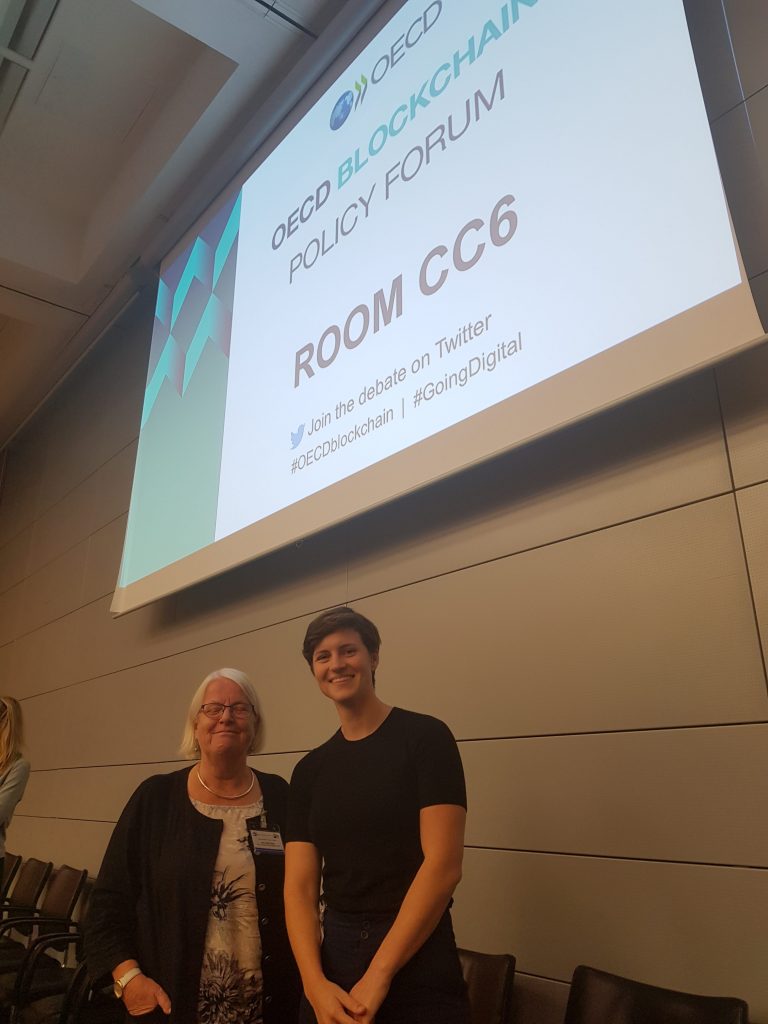
(ISGAN Chair Karin Widegren and Claire Henly, Managing Director from the Energy Web Foundation and moderator of the energy session)

The Forum gathered more than 1000 senior decision makers from the privat and public sector, experts academics and other stakeholders persons and an interesting fact presented was that outside the financial sector energy has been the second largest investment sector for blockchain applications with distributed production and peer to peer trading.

(Presentation of Karin Widegren: “Blockchain in the Energy Domain – Regulatory Perspectives”)


Cookie Policy

1. What are cookies?

Cookies are text files that are stored on a visitor's device that store and retrieve information about their browsing activity. Section 3 of this policy details the specific use of cookies on this website.

If you would like more information about cookies, please see the following links:

2. How to accept, deny or revoke consent for the installation of cookies

The website has a consent manager that allows users to accept, reject or configure the installation of cookies when they access the site. The possible situations are as follows:

  • Consent: By clicking the “Accept” button, you agree to all cookies being installed on your device.
  • Deny consent: In the configuration panel, you can reject all cookies by clicking the “Reject” button.
  • Configure consent: Click the “Settings” button to open a menu where you can specify which types of cookie you consent to being installed.

You can also delete cookies using your browser's settings. These allow you to adjust privacy levels, such as denying all cookies or deleting saved ones. To modify these parameters, consult the manufacturer or review the following documentation: Android Chrome, BraveGoogle Chrome, iOS Safari, Microsoft EdgeMozilla Firefox, Opera, and Safari.

Please note that if you restrict or block some or all cookies from this website, some of the functionalities or services provided on the page may not be available.

3. Types of cookies used on this website

  • Technical cookies: These allow users to navigate the website and use its various options and services, including those used by the editor to manage the website, such as controlling traffic and data communication, identifying sessions, accessing restricted access areas, controlling fraud relating to service security, processing registration or event participation requests, counting visits for software licence billing purposes, using security elements during navigation, storing content for video or audio dissemination, enabling dynamic content (e.g., loading animation of text or images) or sharing content through social networks.
  • Analysis cookies: These allow the responsible party to track and analyse user behaviour. This information is used to measure website activity and introduce improvements based on usage data analysis.

4. List of cookies on this website

The cookies used on this website belong to third parties that are different from the party responsible for service provision. Some of the cookie providers may transfer data to third countries. You can find out about transfers to third countries made by the third parties identified in this Cookie Policy in their respective policies. To find out more, click on the provider's name.

  • Cactus uses the PHPSESSID cookie, a session identifier provided by the server that is strictly necessary for the website to function properly, as it enables users to view and interact with its pages. It also uses the cookie_notice_accepted cookie to store the users' acceptance of the website's cookie policy.
  • Google Analytics uses the _ga cookie to collect anonymous information about how users browse the website is collected, in order to obtain statistics on visits received.