News

Year

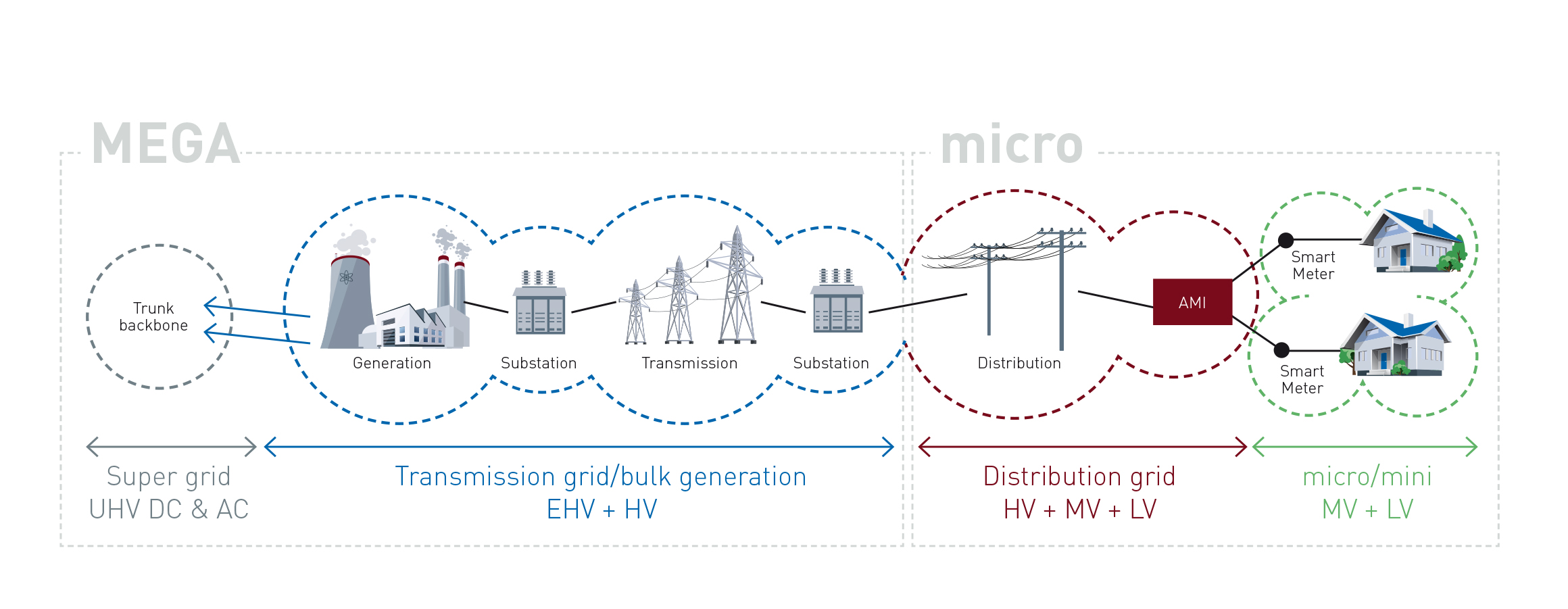
Micro vs mega trends

micro vs MEGA: trends influencing the development of the power system

Webinar: InteGrid Scalability and Replicability Results and Replication Roadmap

The results of the SRA from the InteGrid project are now available and in order to assist with the dissemination process, a stakeholder meeting will be conducted through a webinar on the 2nd of June, 2020. This meeting aims to share the outcomes of the SRA among international participants such that the results, lessons learned and replication roadmap from the project can be shared among a wide range of stakeholders.

Webinar: Smart4RES – Data science for renewable energy prediction

The prediction of Renewable Energy Source (RES) production is a worldwide challenge for Smart Grids. In this webinar, you will learn next-generation solutions proposed by the European Project Smart4RES: • Future power system applications based on RES forecasting, • Innovative weather and RES forecasting products to increase performance by 10-20%.

Ground-breaking new collaboration involving four CEM work streams

The Clean Energy Ministerial Horizontal Accelerator for Power System Integration of Electric Vehicle (EV) Infrastructure is an innovative new mechanism strengthening the collaboration and capitalising on the synergies between four CEM workstreams involving the International Smart Grid Action Network (ISGAN), 21st Century Power Partnership (21CPP), the Electric Vehicle Initiative (EVI) & the Power System Flexibility (PSF) Campaign. The CEM Horizontal Accelerator is a step towards developing a cross-sectoral and holistic

Webinar: New business models for distribution grid stakeholders under high penetration of DER

In a context with high penetration of distributed energy resources, the smartening and digitalization of distribution grids enable unlocking the potential of distributed flexibilities. However, new business models are necessary to make this a reality. This webinar will explore some of these new business models, with a focus on four main agents, namely DSOs, aggregators, end-users, and data service providers. The challenges and opportunities for these stakeholders are discussed, with

Webinar: Assessment of smart grid initiatives: the ISGAN smartgrideval toolkit

Smart grid initiatives have grown the complexity of planning activities, the related wide-range impacts require broad approaches for being properly accounted. The webinar analyses current practices and use cases of the assessment approaches. The advantages of combining Cost-Benefit and Multi-Criteria analyses are presented. A tutorial on the smartgrideval software developed as a part of ISGAN activities is provided.

ISGAN Executive Committee Meeting (ExCo19)

In reference to the latest developments of the Coronavirus risk assessment and outbreaks across the world ISGAN Presidium would like to inform on the situation regarding the ExCo19 meeting in Berlin.

Webinar: The need to model coupled energy networks to transition to a decarbonized future

The coordination between planners and operators of coupled energy systems will allow the further integration of renewable energy sources in the electricity network by storing energy in fuel form over long periods of time using power-to-gas, the recovery and more efficient use of heat, and the decarbonization of industrial processes and transportation modes that can’t be electrified. Energy networks, such as electricity grids and natural gas pipeline networks, have traditionally

Policy Messages on Upscaling of Smart Grid Research and Innovation

As part of the umbrella initiative “Public Support to Smart Grid Research and Innovation” (2017-2019), an interdisciplinary group of stakeholders from nine countries (Austria, Belgium, Germany, India, Korea, Netherlands, Russia, Spain and Sweden) have jointly explored and shared knowledge on different types of barriers to upscaling of smart grid research and innovation. The project, developed within the ISGAN Knowledge Transfer Platform, focused on the role of public sector institutions, in

Webinar: CoordiNet- Large scale demonstrations for TSO-DSO Cooperation

The webinar presents the CoordiNet project which aims at demonstrating how Distribution System Operators (DSO) and Transmission System Operators (TSO) shall act in a coordinated manner to procure and activate grid services in the most reliable and efficient way through the implementation of three large-scale demonstrations.

Subscribe for Updates

Sign up to our newsletter to receive information about ISGAN activities, news, and events.

Cookie Policy

1. What are cookies?

Cookies are text files that are stored on a visitor's device that store and retrieve information about their browsing activity. Section 3 of this policy details the specific use of cookies on this website.

If you would like more information about cookies, please see the following links:

2. How to accept, deny or revoke consent for the installation of cookies

The website has a consent manager that allows users to accept, reject or configure the installation of cookies when they access the site. The possible situations are as follows:

  • Consent: By clicking the “Accept” button, you agree to all cookies being installed on your device.
  • Deny consent: In the configuration panel, you can reject all cookies by clicking the “Reject” button.
  • Configure consent: Clicking the “Settings” button will open a menu with more information.

You can also delete cookies using your browser's settings. These allow you to adjust privacy levels, such as denying all cookies or deleting saved ones. To modify these parameters, consult the manufacturer or review the following documentation: Android Chrome, BraveGoogle Chrome, iOS Safari, Microsoft EdgeMozilla Firefox, Opera, and Safari.

Please note that if you restrict or block some or all cookies from this website, some of the functionalities or services provided on the page may not be available.

3. Types of cookies used on this website

  • Technical cookies: These allow users to navigate the website and use its various options and services, including those used by the editor to manage the website, such as controlling traffic and data communication, identifying sessions, accessing restricted access areas, controlling fraud relating to service security, processing registration or event participation requests, counting visits for software licence billing purposes, using security elements during navigation, storing content for video or audio dissemination, enabling dynamic content (e.g., loading animation of text or images) or sharing content through social networks.
  • Personalisation cookies: These allow information to be remembered so that the user can access the service with certain characteristics that can differentiate their experience from that of other users, such as language, the number of results to display when performing a search and the appearance or content of the service depending on the type of browser or region used to access the website.
  • Analysis cookies: These allow the responsible party to track and analyse user behaviour. This information is used to measure website activity and introduce improvements based on usage data analysis.

4. List of cookies on this website

The cookies used on this website belong to third parties that are different from the party responsible for service provision. Some of the cookie providers may transfer data to third countries. You can find out about transfers to third countries made by the third parties identified in this Cookie Policy in their respective policies. To find out more, click on the provider's name.

  • Cactus uses the PHPSESSID cookie, a session identifier provided by the server that is strictly necessary for the website to function properly, as it enables users to view and interact with its pages. It also uses the cookie_notice_accepted cookie to store the users' acceptance of the website's cookie policy.
  • Google Analytics uses the _ga cookie to collect anonymous information about how users browse the website is collected, in order to obtain statistics on visits received.