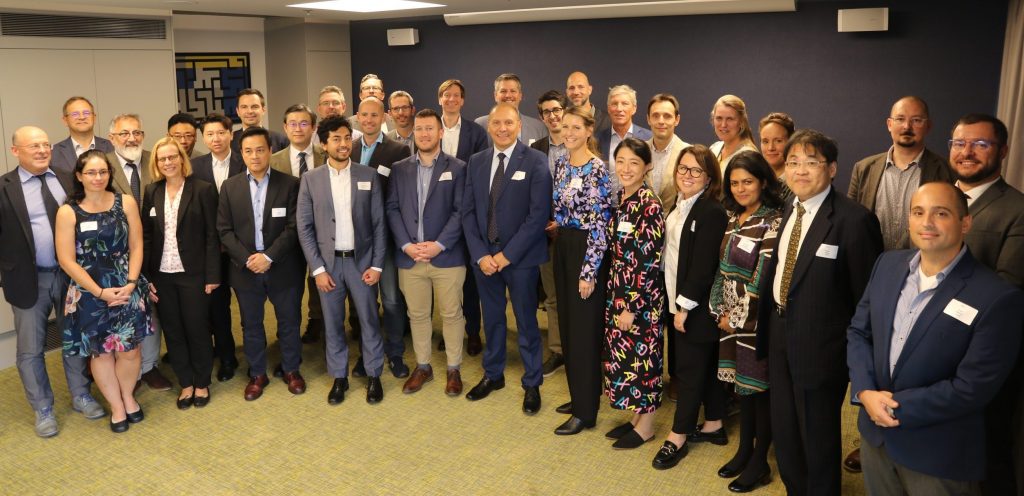
The 26th ISGAN Executive Committee (ExCo) meeting took place in Utrecht, Netherlands, from September 26th to 28th, 2023. The meeting brought together delegates and experts from around the world to explore the latest developments and best practices in smart grid initiatives, with a strong focus on developing international best practices and implementing policies that can accelerate the global transition to clean energy systems.
The meeting commenced with an opening address by Jean-François Gagné, Head of Secretariat at the Clean Energy Ministerial (CEM). Gagné emphasized the importance of “Insights,” “Impacts,” and “Inspiration” in achieving the transition to clean energy. This set the stage to highlight the recent collaborations between CEM and ISGAN in driving momentum towards this shared goal and to preview upcoming events such as COP28 and CEM15 in Brazil.
During the second morning session, delegates and working group managers engaged in discussions aimed at aligning their work and expertise with ISGAN’s overarching objectives through a Lighthouse Project. This innovative initiative aims to bring together ISGAN working group’s diverse perspectives and leverage collective strengths to maximize the impact of smart grid actions.
In the afternoon sessions, ISGAN members provided updates on ongoing collaborations and partnerships with the International Energy Agency (IEA), European Technology and Innovation Platform for Smart Networks for Energy Transition (ETIP SNET), and Global Power System Transformation (GPFM). These collaborations enable the sharing of valuable insights, the pooling of resources, and the promotion of best practices in sustainable energy across the globe.
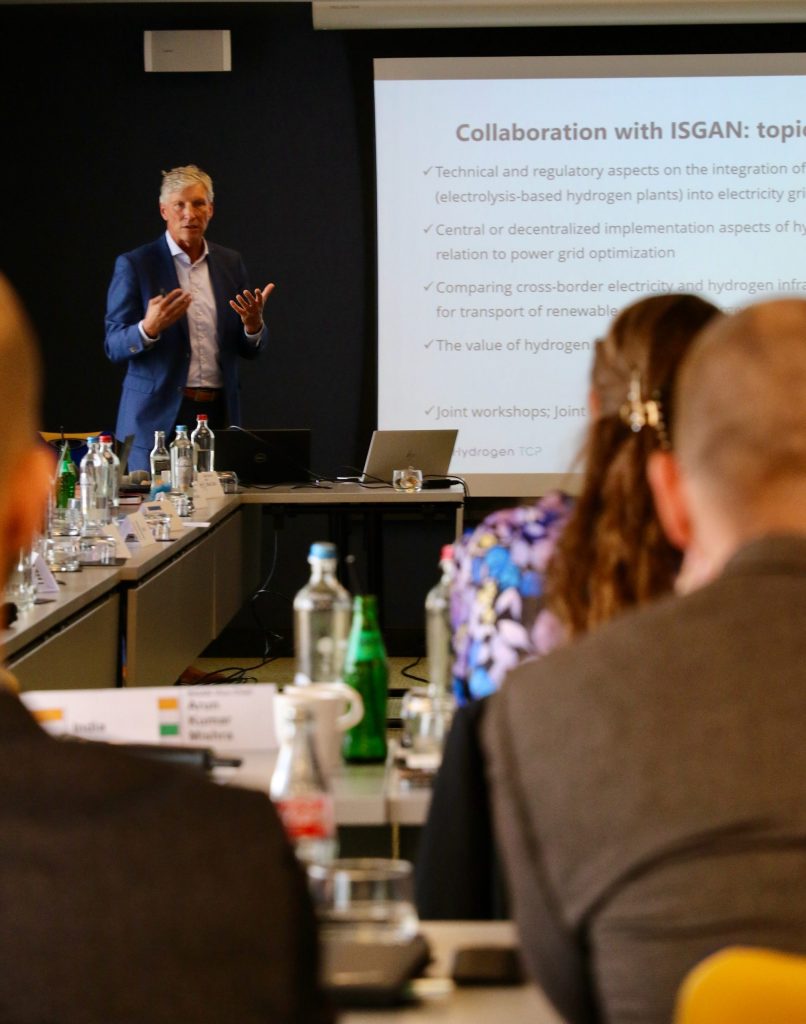
In the afternoon, members heard from IEA’s Hydrogen TCP co-chair Marcel Weeda. Marcel spoke about the potential of hydrogen for unlocking the full capacity of variable renewable energy sources. Hydrogen continues to be a promising solution for energy storage and grid balancing, offering new possibilities for integrating renewable energy into existing power systems.
The second day of the ExCo focused on working groups, beginning with new programs of work for WG5 and WG7. WG5: Smart Grid International Research Facility Network (SIRFN) addresses various testing-related topics, including microgrids, power system dynamics, distributed energy resources (DER), active distribution networks, electrical vehicles, and cyber-physical energy systems. WG5 manager Ron Brandl discussed how to the group will continue their work with benchmark systems/models, real-time and co-simulation, rapid control prototyping, test automation, and grid codes and standards.
Next, Branislav Iglár of WG7: Smart Grids Transitions showed their group’s new, more comprehensive approach, drawing on frameworks such as sustainability transitions and reflexive governance. WG7 has recently repositioned itself to address the institutional, governance, and socio-technical challenges associated with the long-term deployment of smart grids. These frameworks provide guidance for policy intervention strategies to facilitate successful smart grid transitions.
In the afternoon “World Café,” members had the opportunity to engage with Working Group Managers in small-group discussions. Each table focused on a different action area of smart grid development, fostering conversations, sharing experiences, and exploring potential collaborations to further advance smart grid initiatives.
The final day of the meeting included a visit and update from Reji Kumar Pillai, Chair of the Global Smart Energy Federation (GSEF). GSEF and ISGAN continue to have an MOU and strong cooperation, primarily through the annual Awards of Excellence.
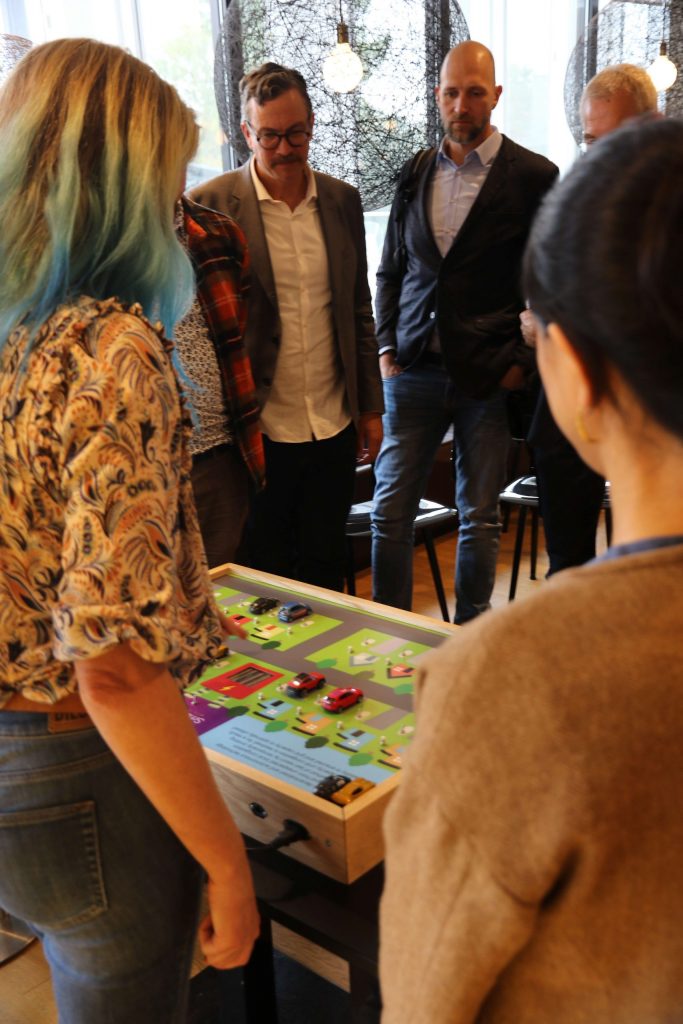
Finally, members made a site visit to the headquarters of ASR Insurance Company in Utrecht. The demonstration featured the “Smooth EMS: GridShield Project,” which examines the interchanges between smart grids and electric vehicles. By gauging and predicting the driving and charging behaviors of dozens of EV owners, emerging products like GridShield can help smooth out spikes in demand and reduce the possibility of overloading local grids.
The ISGAN ExCo meeting in Utrecht showcased the commitment and collaborative efforts of global stakeholders in advancing smart grid actions. Special thanks to Nicole Kerkhof-Damen and her team for hosting the 26th ExCo meeting and giving our members the opportunity to gain firsthand exposure to innovative solutions and technologies.