Knowledge Exchange on Experimental (Regulatory) Sandboxes to Enable Smart Grid Deployment

Experimental (Regulatory) Sandboxes for Smart Grid Transitions has been the focus for a major ISGAN inter-Annex knowledge exchange initiative in partnership with the International Confederation of Energy Regulators (ICER), with the purpose of identifying key lessons learned and examples of good practice in regard to the design and implementation of such innovative policy instruments. The project was led by an international team of ISGAN experts and involved about 45 participants from more than 20 countries.
Policy Messages on Innovative Regulatory Approaches with Focus on Experimental Sandboxes to Enable Smart Grid Deployment
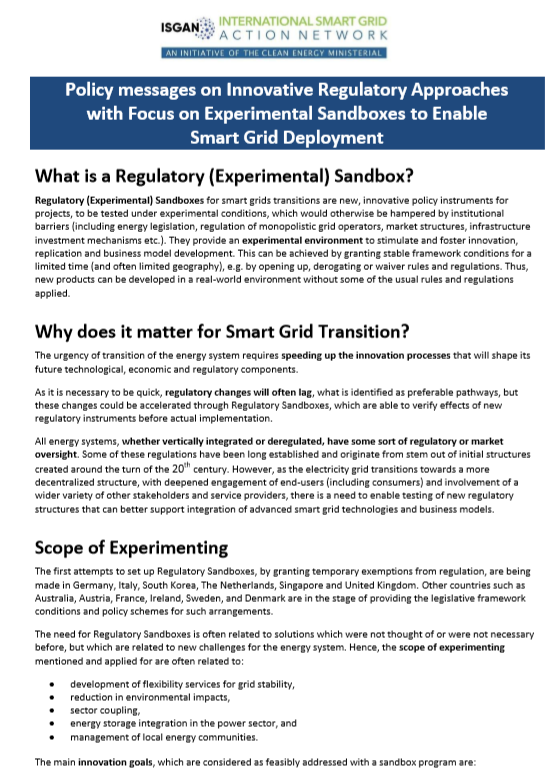
The urgency of transition of the energy system requires speeding up the innovation processes that will shape its future technological, economic and regulatory components.
The Smart Grid Discourse Arena: A Global Social Network Analysis
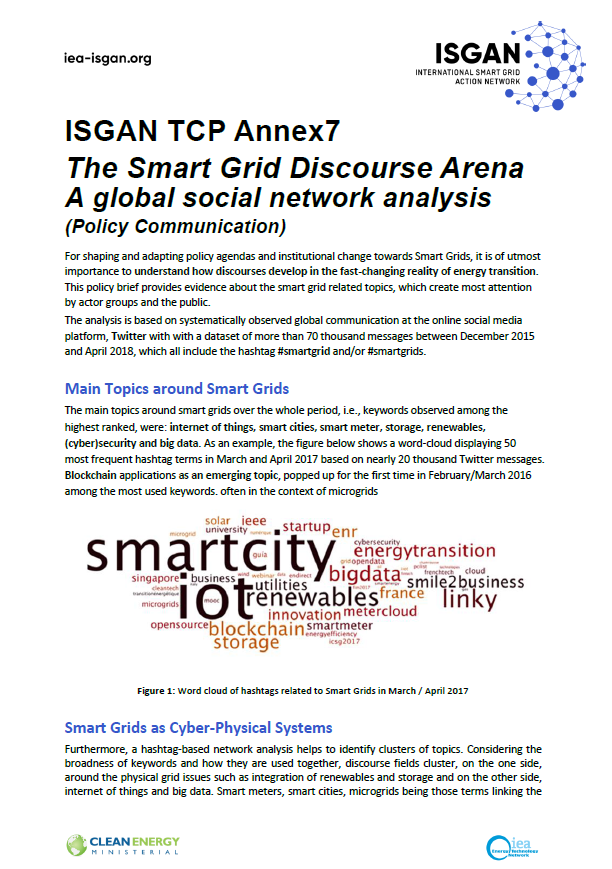
For shaping and adapting policy agendas and institutional change towards Smart Grids, it is of utmost importance to understand how discourses develop in the fast-changing reality of energy transition. This policy brief provides evidence about the smart grid related topics, which create most attention by actor groups and the public.
The analysis is based on systematically observed global communication at the online social media platform, Twitter with with a dataset of more than 70 thousand messages between December 2015 and April 2018, which all include the hashtag #smartgrid and/or #smartgrids.
ISGAN Side Event at CEM9 – Policy Brief and Workshop Summary
Opportunities to Accelerate Smart Grid Deployment through Innovative Market Design – jointly organized with the Swedish Smart Grid Forum (23rd and 24th May – as part of the Nordic Clean Energy Week in Malmö and Copenhagen)
Phase-Sensitive Enabling of Household Engagement in Smart Grids
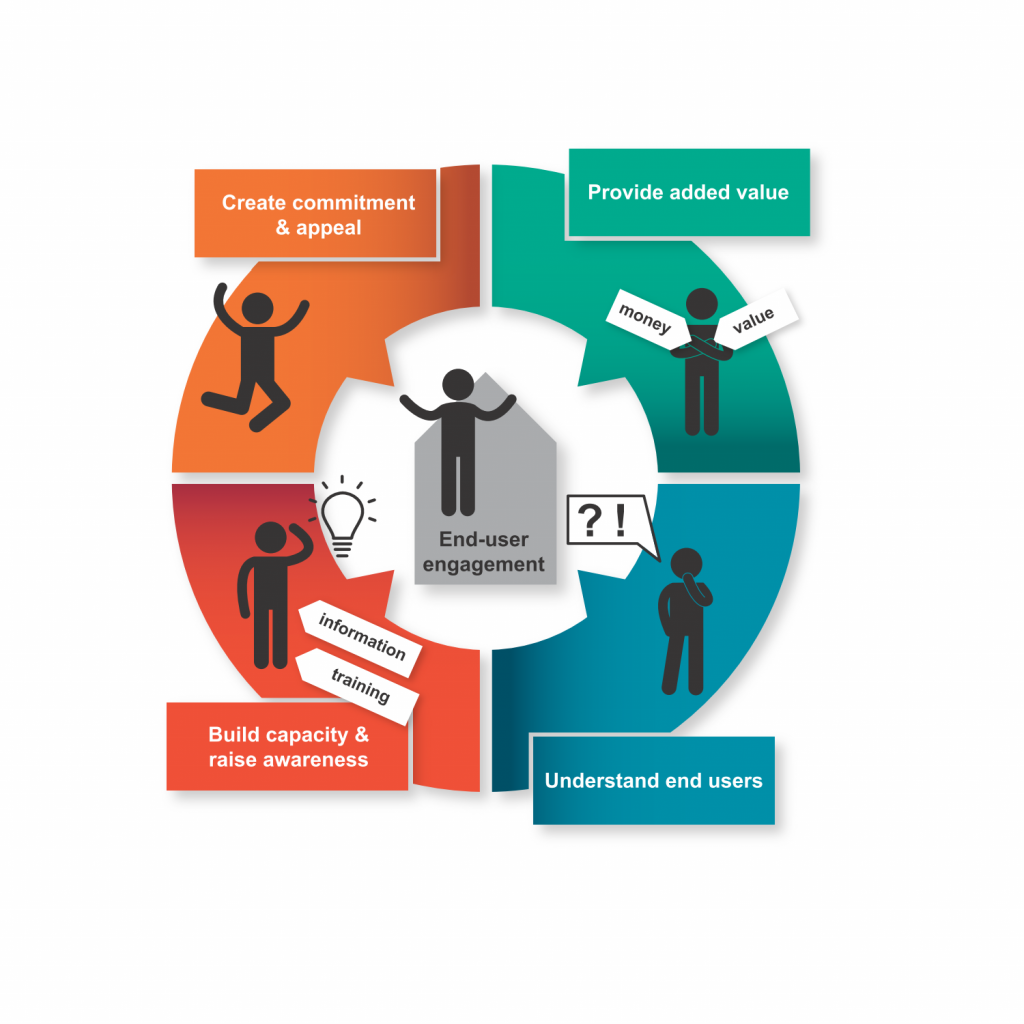
Today, flexibility in energy end-use, particularly by households, is not sufficiently stimulated in many countries. Hence system-level benefits such as reduced electricity bills, better integration of renewable electricity generation and lowering of grid costs, are not realized.
Why We Do Not Know Much about the Social Dimension of Smart Grids Transition?
Dealing with smart grids transitions, three years of activity of Annex 7 make it evident that policy makers are having many important questions about the dynamics of institutional change which need new answers.
Smart Grid Policy Messages for the Clean Energy Ministerial

The document was disseminated at the 8th Clean Energy Ministerial that took place in Beijing, China. It was developed by ISGAN Annex 4: Synthesis Insights for Decision Makers.
The Smart and Strong Grid: Technology, Policy, and Finance to Connect People with Reliable Clean Energy

In the developing world, demand is growing rapidly, driving the need for massive investments in grids to connect more and more people while delivering high levels of service.
Managing Consumer Benefits and Costs

In some jurisdictions, the roll out of smart grid technologies has achieved less consumer engagement than would be desirable, and in particular some projects have failed to clearly communicate the benefits and costs of smart grid technologies, resulting in mixed reactions from consumers.
Smart Grid Cyber Security
Maximizing electric sector innovation while minimizing cyber security risk is a key goal of smart grid policy development.