2024 Annual Report
The 2024 ISGAN Annual Report presents a detailed account of the network’s achievements and progress over the past year as a vital platform for international collaboration on smart grid innovation and policy development.
Exploring the interaction between power system stakeholders: Insights from Pilot Projects – Discussion Paper
This discussion paper provides insights from global pilot projects on flexibility for coordinated capacity management by TSOs and DSOs. The discussion paper examines key challenges and lessons learned across technical, ICT, market, economic, and regulatory aspects. The study consolidates information gathered from literature reviews, stakeholder surveys, workshops, and expert interviews to assess best practices and trends.
Active System Management by DSOs – Discussion Paper
Discussion paper that provide insights into how DSOs can leverage active system management to cost-efficiently and securely manage their grids. These insights stem from a series of interactive workshops held with members of the ISGAN WG6 and other interested parties.
ISGAN Launches New Policy Brief at CEM15 in Brazil
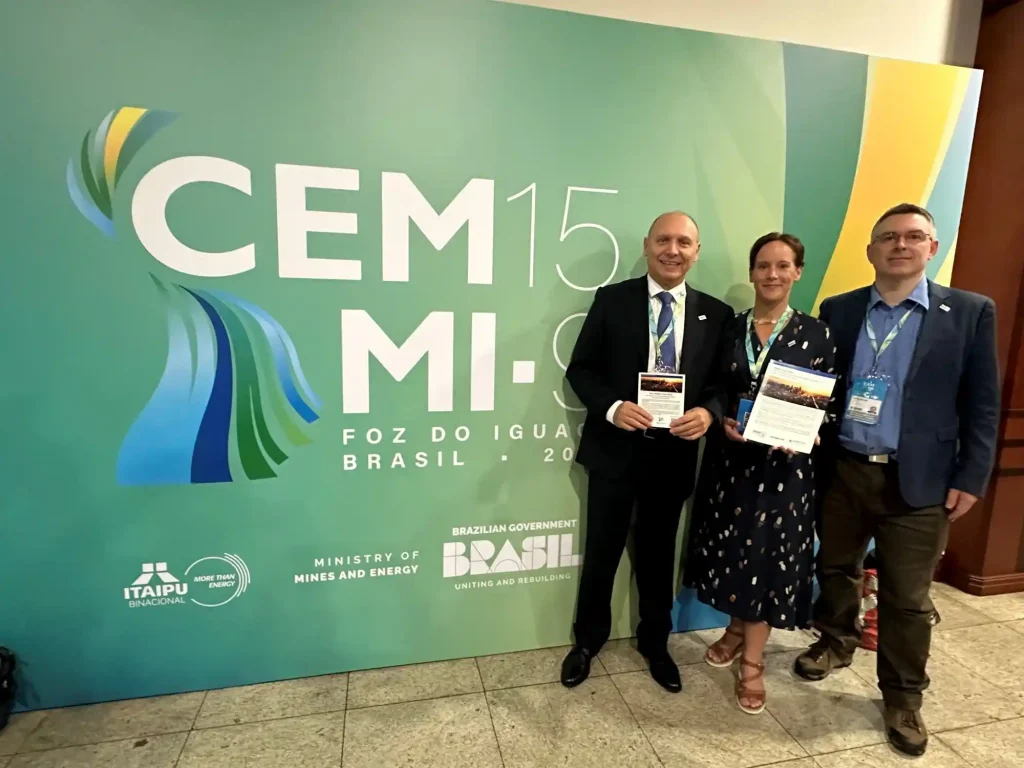
In conjunction with the Clean Energy Ministerial Meeting (CEM15), ISGAN has launched a new Policy Brief on Long-Term Planning and Implementation of Smart Distribution Grids.
ISGAN Policy Brief on Long-Term Planning of Smart Distribution Grids
To spotlight the importance of low- and medium-voltage grids and their key role in clean energy transitions, ISGAN is publishing a new Policy Brief on Long-Term Planning and Implementation of Smart Distribution Grids.
2023 ISGAN Annual Report

The 2023 Annual Report of ISGAN offers a comprehensive overview of its activities and progress over the past year. With a strong emphasis on collaboration, ISGAN brings together countries from five continents, encompassing both developed and emerging economies. This diverse membership creates a rich environment for sharing knowledge, strategies, and best practices that inform policymakers at regional, national, and international levels.
Network Planning and Decision-Making under Uncertainty – Discussion Paper and Policy Brief
Recognizing the pivotal role of electrical grids in achieving net-zero emissions and addressing a wide spectrum of ecological, social, and economic aspects of sustainable development, ISGAN Working Group 6 joined forces with the ISGAN Communication Working Group, to spearhead a collaborative knowledge sharing project (KSP) on Network Planning and Decision-Making under Uncertainty.
Taxonomy to Quantify Flexibility Potential
To make net zero technically and economically feasible, the future power system will need to capture flexibility from various resources (i.e., generation, storage, and loads) across various segments of the power system (i.e., generation, transmission, distribution, and end-use loads). The uptake of digitalization, the adoption of distributed energy resources and the push for cross-sectoral electrification is transforming traditional grid operation; resources with flexibility potential in distribution grids can be a key solution to support grid reliability, resiliency, and optimized system utilization via flexibility markets.
How can Aggregators Improve the TSO-DSO-Customer Coordination in Digitalised Power Systems? – Discussion Paper and Policy Brief
Utilizing untapped Distributed Energy Resources (DERs) potential from customers in the distribution grid necessitates TSO-DSO-Customer coordination. Customers still face challenges how to manage and market their flexibility in the energy market and how they can become active customers. Aggregators can facilitate these flexibilities as an intermediary by providing services to different power systems participants.
Summary of regulatory activities and conclusions of the FlexPlan project
The FlexPlan Horizon 2020 project aimed at establishing a new grid-planning methodology which considers the opportunity to introduce new storage and flexibility resources in electricity transmission and distribution grids as an alternative to building new grid elements, in accordance with the intentions of the Clean Energy for all Europeans regulatory package of the European Commission.