From 3 to 5 June 2026, ISGAN representatives participated in the Clean Energy Ministerial (CEM) Senior Officials’ Meeting (SOM) in Brussels, Belgium. The event brought together government representatives, international organisations, industry stakeholders, and experts from across the global clean energy community to discuss priorities for the energy transition and prepare for the upcoming CEM17 Ministerial meeting in Riyadh, Saudi Arabia.
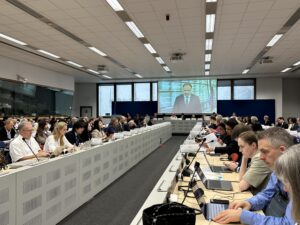
The three-day programme focused on advancing the CEM work programme through plenary discussions, sectoral spotlight sessions, technical meetings, and networking opportunities. Key themes included power system investment, transport electrification, energy efficiency, artificial intelligence, and international cooperation.
As part of the official programme, ISGAN organised two technical sessions that showcased its work on artificial intelligence and smart distribution grids, while also contributing to wider discussions on power system transformation and grid modernisation.
On 3 June, ISGAN hosted the technical session “AI for Grid Modernisation”, building on the successful workshop on AI and Digitalisation for Grid Modernisation organised alongside the 31st ISGAN Executive Committee Meeting (ExCo31) in Rome. Organised in close cooperation with the European Commission, the session aimed to explore how artificial intelligence can support global power system transformation through smarter grid planning, enhanced system flexibility, and strengthened innovation-oriented cooperation.
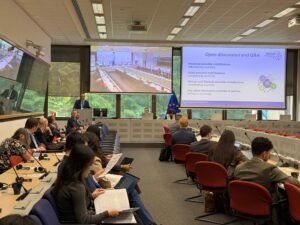
The session featured contributions from:
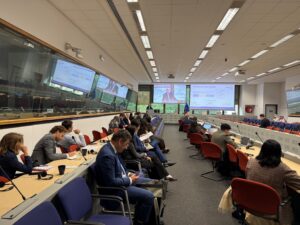
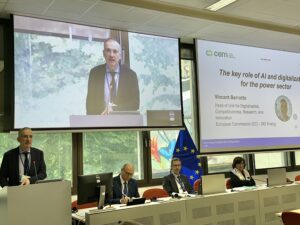
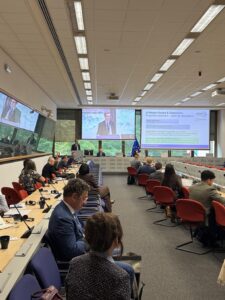
The discussion addressed several key topics, including the European Commission’s recently launched roadmap on the AI–energy nexus, the role of energy data spaces, AI applications for congestion management and flexibility, and the importance of trustworthy, explainable, and secure AI solutions for critical energy infrastructure.
Participants also discussed collecting practical AI use cases from around the world to support the development of a joint ISGAN-ETIP SNET report on AI applications in smart grids, which will be presented at the CEM17 Ministerial in October 2026. More than twenty use cases have already been identified and are being considered as part of the report development process.
We would like to extend our sincere thanks to all the speakers and participants for their valuable contributions and active engagement.
Immediately after the AI session, ISGAN organised a second technical meeting dedicated to its flagship Lighthouse Project on Long-Term Planning and Implementation of Smart Distribution Grids under Uncertainty. The session brought together ISGAN members and external stakeholders to discuss the progress achieved so far and explore future collaboration opportunities.
The session included contributions from:
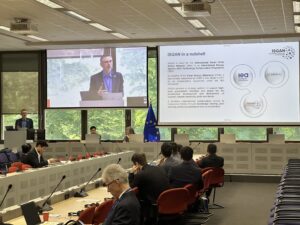
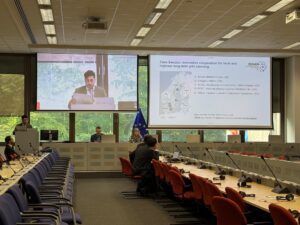
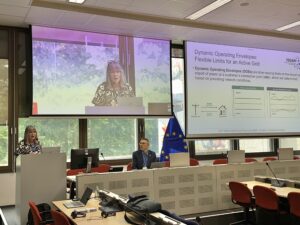
The speakers presented experiences and lessons learned from Australia, Sweden, and other countries. They highlighted how distribution grid planning is being reshaped by increasing uncertainty, growing electrification, distributed energy resources, changing consumer behaviour, and evolving regulatory frameworks. Particular attention was given to the importance of stakeholder coordination, data-driven planning approaches, and the need to move beyond traditional siloed planning processes towards more collaborative planning ecosystems.
The session also showcased the ongoing work on the Lighthouse Project Casebook, which aims to document international experiences and best practices related to smart distribution grid planning and implementation. Participants discussed how these insights can support policymakers, regulators, and network operators in addressing emerging challenges and accelerating the deployment of future-ready distribution networks.
ISGAN would like to thank all the speakers and participants for their valuable contributions to the discussion.
In addition to their own technical sessions, ISGAN representatives actively participated in several discussions across the wider CEM programme.
These included the Transport-Energy Session, particularly the discussion on Maintaining Momentum on the E-Mobility Revolution, which examined the next phase of international collaboration on electric mobility and the growing need for coordination between transport and energy systems. Participants explored challenges related to charging infrastructure, vehicle-grid integration, heavy-duty vehicle electrification, and supply chain resilience.
ISGAN representatives also contributed to the Power Sector Investment Spotlight Session, which focused on practical solutions to accelerate investment in power system infrastructure. Discussions highlighted the importance of integrated planning, coordinated action on transmission and distribution networks, financing mechanisms for key technologies such as energy storage, and stronger coordination between regulators and policymakers.
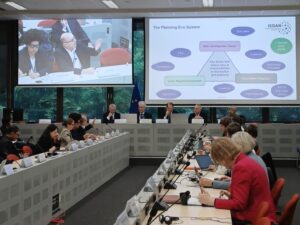
ISGAN took advantage of CEM SOM and Mission Innovation Annual Gathering to renew its collaboration with the Green Powered Future Mission (GPFM) by signing of a new Memorandum of Understanding (MoU) in the presence of representatives from the European Commission, reaffirming the commitment of both initiatives to work together on the development of smarter and more resilient power systems.
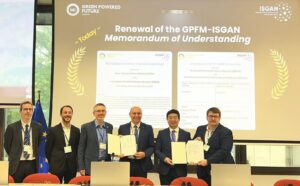
Building on an MoU signed in 2022, this renewed partnership brings together two complementary initiatives with a shared vision to enable power systems that are more flexible, resilient, affordable, and capable of supporting a renewable-powered future. The agreement establishes a framework for long-term cooperation and identifies several areas for joint action, including workshops and webinars, collaborative activities between ISGAN Working Groups and GPFM research and innovation pillars, knowledge sharing and lessons learned, and the development of joint factsheets and dissemination activities.